How to Choose the Right Vinyl Flooring for a Minnesota Basement
August 26, 2026
QUICK ANSWER: Waterproof vinyl plank with a rigid SPC (stone plastic composite) core is generally the strongest basement match in Minnesota, because it tolerates cold concrete, resists swelling from slab moisture, and holds its shape through the state's wide seasonal humidity swings. Floating click-lock installation works well over a slab once it passes moisture and pH testing, while glue-down is better suited to large open rec rooms that see heavier furniture and foot traffic. Before any material gets chosen, the concrete slab itself needs to be tested — ASTM F710 calls for both a relative humidity probe reading and a pH check before resilient flooring goes down. Keeping basement humidity in the 30-50% range, as recommended by the EPA and CDC, protects the investment long after installation day.
Your basement slab doesn't act like the subfloor upstairs, and it never will. It sits below grade, pressed against soil that stays cool and often damp well into summer, and it soaks up the swing between a dry January and a sticky August in its own slow way. Most basement flooring failures trace back to that gap. Not a bad material choice — a slab that nobody actually checked before the new floor went down.
Twin Cities relative humidity averages sit in the high 60s most of the year and climb into the low 70s by late summer and fall, per National Weather Service climate normals for Minneapolis-St. Paul. A basement with no mechanical humidity control tends to drift close to whatever's happening outside, and that puts it above the range most flooring manufacturers call safe. So picking flooring for a basement really starts with the room's actual conditions, not a sample board at the store.
Why Basements Test Flooring Differently
A basement floor deals with three things at once that a main-level room almost never faces together: constant contact with concrete, poor airflow, and humidity that tracks the seasons instead of a thermostat. The EPA recommends keeping indoor relative humidity below 60%, ideally between 30% and 50%, to head off condensation and mold. The CDC sets that same 50% ceiling. A below-grade room in Minnesota can blow past both numbers without a dehumidifier running, and that puts real strain on any flooring material not built to take it.
Wood cores and wood-based laminate soak up moisture from a slab and swell. You'll see it as peaking seams, cupped boards, or a soft spot near an exterior wall. A waterproof vinyl core doesn't absorb water the same way, which is exactly why it's become the default recommendation for basements across the Upper Midwest.
Matching the Vinyl Type to the Room
No two vinyl planks are built alike, and the gap between them matters more below grade than anywhere else in the house.
Rigid SPC core. Stone plastic composite cores are dense and hold their shape, so they resist expanding or contracting as the slab's temperature and moisture level shift through the year. They also handle a cooler subfloor better than softer WPC (wood plastic composite) cores. That's why SPC tends to be the pick for unheated or partially heated basements.
Click-lock vs. glue-down. Floating click-lock planks go down over a prepared slab without adhesive, which speeds the job along and lets the floor move a little as temperatures shift — handy in a room that isn't climate-controlled year-round. Glue-down creates a permanent bond that holds up in larger open areas or spaces carrying heavier gear, home gym equipment, or rolling furniture, since there's no floating layer underneath to shift.
Waterproof and water-resistant aren't the same thing, either. A truly waterproof core is built to sit under standing moisture from a slab without swelling. Water-resistant vinyl handles splashes fine but wasn't designed for sustained dampness. In a basement, that difference is worth checking at the sample stage, not assuming.
TIP: Before you shop for material, run a dehumidifier in the basement for a week and track the reading with a cheap hygrometer. If the room won't hold steady in the 30-50% range even with a dehumidifier working, sort that out before flooring goes down — not after.
What the Slab Needs Before Flooring Goes Down
Vinyl plank only performs as well as the surface underneath it. ASTM F710, the industry standard for prepping concrete floors to receive resilient flooring, calls for testing the slab's relative humidity with an in-situ probe and checking its pH before installation, no matter how old the slab is. A slab that reads high on either test can still take flooring, but it usually needs a moisture mitigation step first, like a topical sealer or vapor barrier rated for whatever reading it produced.
Skipping that step is the number one reason basement vinyl floors fail early. The plank itself might be rated waterproof, but the adhesive, underlayment, and seams between planks can still take damage from a slab that was never actually tested. A qualified installer measures first and recommends a product second, not the other way around.
How the Room Gets Used Shapes the Decision
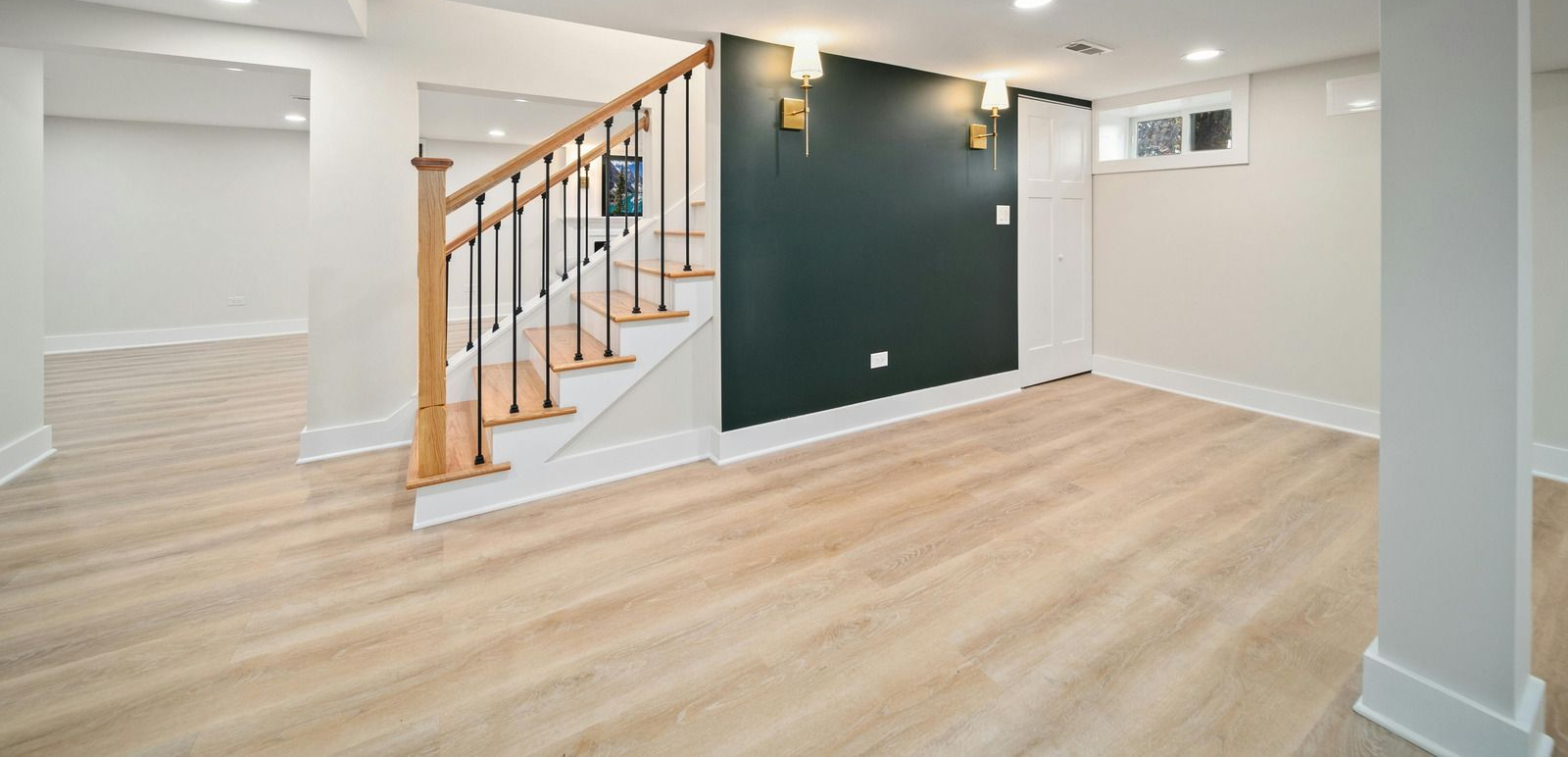
A finished rec room, home office, or guest space doesn't ask the same things of a floor as a laundry or mechanical room in the same basement. Space near a sump pump, water heater, or laundry hookup carries real risk of standing water and does better with a fully waterproof core and sealed seams. A quiet corner set up as an office or media room has more room to play — wider wide-plank formats can make that space feel less like a basement and more like an extension of the floor above it.
WARNING: A slab that's flooded before — even once, even years ago — needs moisture testing before any new flooring goes in, no matter how dry it looks or feels today. One past flood can leave moisture trapped under an old floor covering that won't show up without a proper reading.
Maintaining a Basement Vinyl Floor Through Minnesota's Seasons
A waterproof vinyl floor needs less upkeep than most basement flooring once it's installed, but Minnesota's humidity swings still ask for some attention. Run a dehumidifier during the muggier months to keep relative humidity in the range the EPA and CDC recommend — it protects the framing around the floor as much as the floor itself. Sweeping and damp mopping cover the daily routine. Felt pads under furniture legs stop dents from forming over time, and rigid core planks already resist scratching pretty well on their own.
Frequently Asked Questions
Is vinyl plank actually waterproof, or just water-resistant?
Depends on the product. Rigid core vinyl plank, especially SPC construction, is often built with a genuinely waterproof core meant to sit under standing moisture without swelling. Water-resistant products give less protection and suit rooms with occasional splashes better than sustained basement dampness.
Does a Minnesota basement need a vapor barrier under vinyl plank?
Depends on what the slab's moisture testing shows. A slab reading within an acceptable relative humidity range under ASTM F710 testing may not need one. A higher reading usually calls for a vapor barrier or topical moisture mitigation product before installation.
Can vinyl plank go over an old vinyl or tile floor in a basement?
Often, yes — as long as the existing surface is flat, clean, and firmly bonded to the slab. A professional installer still checks the subfloor first, because covering a failing or moisture-compromised layer just hides the problem instead of fixing it.
How does basement humidity affect a vinyl floor that's already installed?
Sustained humidity above the 50-60% range the EPA and CDC recommend can lead to condensation on cool surfaces and create conditions for mold to grow on nearby organic material, even though the vinyl itself resists moisture damage. Keep a dehumidifier running during humid months and you protect the whole room, not just the floor.
Is click-lock or glue-down better for a Minnesota basement rec room?
Both hold up below grade when the slab is prepped correctly. Click-lock usually installs faster and allows a little movement as temperatures shift. Glue-down offers more stability in larger open rooms or spaces holding heavier furniture or equipment.
A Basement Floor Built for Minnesota Conditions
Choosing the right basement flooring comes down to understanding how moisture, cold concrete, and seasonal humidity affect the space. Waterproof vinyl plank with a rigid SPC core offers dependable stability, while proper slab testing helps prevent problems beneath the finished surface. With 100 years of experience, Affordable Floor Installation helps homeowners in Osseo, MN select vinyl flooring that fits both their basement conditions and the way they plan to use the room for years to come.
Good results depend just as much on preparation as they do on the flooring itself. Testing concrete moisture and pH, controlling basement humidity, and choosing between click-lock and glue-down installation all contribute to lasting performance. When those details are handled correctly, vinyl flooring creates a comfortable, attractive surface that stands up well to Minnesota's changing seasons. The result is a basement that feels more finished, stays easier to maintain, and remains practical for everyday living throughout the year.